
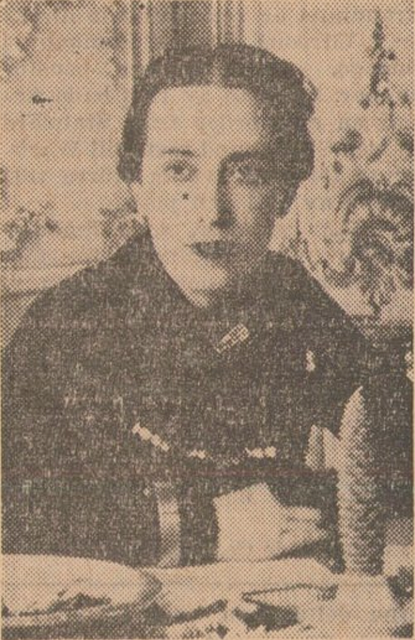
Elsa Schiaparelli did not follow the conventional path into fashion. She had no formal training in dressmaking and was less interested in perfecting polite clothes than in disrupting what clothing could communicate. Working alongside artists including Salvador Dalí, Jean Cocteau and Man Ray, she treated fashion as a form of cultural production: collaborative, theatrical and open to contradiction.
Her practice offers a useful model for artists, designers and brands today. Schiaparelli shows that collaboration can do more than add prestige or decoration. At its best, it can create a shared language, sharpen a point of view and produce images that remain culturally active long after the original object has disappeared.
This energy is central to the work we do at Art Account. We consider how distinct talents, opportunities, resources and audiences can be brought together to make work that none of the participants could produce alone. That requires more than an introduction. It means identifying productive differences, creating the conditions for exchange and building the systems that allow an unexpected idea to become real.
An outsider enters fashion
Born in Rome in 1890, Schiaparelli grew up in an intellectual and aristocratic environment but resisted its expectations. Her route into fashion was indirect. After periods in London and New York, she settled in Paris, where she encountered the designer Paul Poiret. He encouraged her interest in clothing, despite her lack of technical training.
That absence of formal education became an advantage. Schiaparelli approached fashion without full allegiance to its established rules. She could draw ideas from painting, poetry, performance, architecture and popular entertainment, then ask makers to solve the technical problems.
Her first major success came in 1927 with a hand-knitted trompe-l’oeil sweater featuring an oversized bow. The garment appeared to carry a scarf tied around the neck, but the motif was woven flat into the surface. Practical knitwear became an optical joke. American buyers responded quickly, and the design established a principle that would shape her career: a garment could be wearable, commercially viable and conceptually strange at the same time.
Elsa Schiaparelli and Surrealism
Schiaparelli’s Paris was also the Paris of Surrealism. Artists and writers were exploring dreams, chance, eroticism, the unconscious and the instability of ordinary objects. René Magritte painted impossible scenes with precise calm. Man Ray experimented with photography and the body. Salvador Dalí transformed familiar forms into unsettling symbols.
Fashion provided fertile ground for these ideas because clothing already sits between object and body, private identity and public display. Schiaparelli understood that a dress could make the familiar unfamiliar. Buttons might resemble insects or sweets. Pockets could become drawers. A shoe could become a hat. The wearer could appear elegant and absurd at once.
This brought boldness to the conventions of polite fashion. Rather than rejecting luxury, Schiaparelli used its materials and social settings as a stage for disruption. Her work entered salons, parties and shop windows dressed in the codes of refinement, then introduced humour, unease and spectacle.
Collaboration with Salvador Dalí
The collaboration between Elsa Schiaparelli and Salvador Dalí produced some of the most enduring images in fashion history. Their work was not a simple case of applying an artist’s picture to a garment. Dalí’s recurring symbols and Schiaparelli’s understanding of dress were translated into objects designed around the moving body.
The Lobster Dress of 1937 placed a large painted crustacean across the skirt of a white silk evening gown. The lobster carried suggestive associations within Dalí’s work, but the dress also relied on social contrast: a messy, edible creature intruding upon the immaculate surface of formal wear. When Wallis Simpson wore it in photographs by Cecil Beaton, the collaboration acquired further layers of celebrity, scandal and circulation.
The Shoe Hat turned an upside-down high-heeled shoe into headwear. It challenged the hierarchy of the body by moving an object associated with the ground to its highest point. The result was immediately legible and difficult to forget.
Their Tears Dress used a printed pattern resembling torn flesh, accompanied by a veil with actual appliquéd tears. Here, illusion and material construction worked together. The dress appeared damaged while remaining carefully made, collapsing glamour and bodily vulnerability into a single image.
These projects demonstrate what artist and fashion designer collaborations can achieve when both parties alter their usual methods. The artist gains scale, movement and social context. The designer gains a vocabulary capable of pushing the garment beyond seasonal style.
The Skeleton Dress and the body as canvas
The 1938 Skeleton Dress is among Schiaparelli and Dalí’s most radical works. Made from black crepe, it used padded trapunto quilting to form ribs, a spine and leg bones across the fabric. Instead of concealing the body’s structure beneath an elegant silhouette, the dress brought the skeleton to the surface.
The effect is playful, macabre and technically sophisticated. A soft textile becomes an anatomy. The living wearer carries an image of mortality. Fashion, often associated with changing external appearances, is made to reveal what all bodies share underneath.
Schiaparelli repeatedly used the body as a canvas, but never as a neutral one. A garment changed as it was worn. Its imagery moved through rooms, photographs, performances and social encounters. This is one reason her work remains distinct from art merely reproduced on merchandise. The body completed the idea.
Jean Cocteau, Man Ray and a wider creative network
Dalí was not Schiaparelli’s only artistic partner. Jean Cocteau created drawings that she translated into embroidery for jackets and eveningwear. One celebrated design presents two profiles facing each other; together, they form the outline of a vase. Long golden hair cascades down the back of the garment. The wearer becomes both figure and picture plane.
Schiaparelli also worked within a broader network that included Man Ray, photographers, illustrators, craftspeople and window designers. These relationships helped construct a total creative environment around the house. Photography did not simply document the clothes. Retail interiors and displays did not merely hold products. Each format extended the brand’s worldview.
Her 1938 Circus collection made this approach explicit. Acrobats, horses, clowns and performance motifs appeared across embroidered jackets, hats and accessories. The collection transformed couture into a big-top spectacle while retaining the workmanship expected by elite clients.
The lesson is structural: iconic creative work rarely emerges from a solitary genius. It is usually supported by exchanges among artists, specialist makers, commissioners, performers, image-makers and audiences.
Art Account works from the same understanding. Talent may be abundant, but it does not automatically meet the right commission, collaborator, platform or public. Our role is to help assemble those elements with purpose. By connecting creative practice to strategy, production, partnerships and opportunity, we create the infrastructure through which ambitious ideas can take form and travel.
Shocking perfume and the invention of shocking pink
Schiaparelli’s cultural strategy extended beyond clothing. In 1937 she launched Shocking perfume, named after her preferred vivid magenta, which became known as shocking pink. The colour was not treated as an occasional accent. It functioned as a consistent and ownable brand code.
The perfume bottle was shaped like a woman’s torso, inspired by the measurements of actor Mae West, one of Schiaparelli’s clients. Surrounded by flowers and packaged in shocking pink, it combined celebrity, sexuality, Surrealist displacement and commercial design.
This was branding as world-building. The name, colour, bottle and fashion collections reinforced one another. Shocking pink condensed Schiaparelli’s position into a visual signal: modern, artificial, feminine, excessive and unwilling to behave quietly.
For contemporary cultural organizations and brands, the point is not simply to select a distinctive colour. A strong brand asset gains meaning through repeated use, coherent context and connection to a larger idea. Schiaparelli made magenta memorable because it expressed the same attitude as the work itself.
What creative collaboration can do
Schiaparelli’s practice offers several principles for effective creative collaboration.
First, partnership should introduce productive difference. Dalí did not make Schiaparelli more conventionally fashionable, and she did not ask him to become a conventional textile designer. Their differences generated the work.
Second, collaboration needs translation. An idea must respond to material, movement, audience and use. The Skeleton Dress succeeds because its concept is inseparable from its construction.
Third, playfulness can carry serious content. Humour made Schiaparelli’s work accessible without emptying it of complexity. A visual joke could also address desire, death, status or the instability of identity.
Fourth, spectacle needs systems. Behind the apparent spontaneity were skilled ateliers, commercial distribution, photography, retail design and consistent branding. Bold ideas became culturally durable because the house could produce and circulate them.
Finally, an effective collaboration should create value for the audience, not only visibility for the partners. Schiaparelli’s garments invited people to look twice, interpret and participate. They made fashion an encounter.
These principles also shape Art Account’s approach. We ask what each participant can contribute, where useful friction might arise and what structure the idea needs to succeed. The aim is not collaboration for its own sake. It is to bring the right talents, opportunities, resources and contexts together so that something precise, unexpected and culturally resonant can happen.
From polite fashion to cultural icon
Elsa Schiaparelli became iconic not because she ignored fashion, but because she expanded its field of action. Without conventional design training, she built a practice around ideas, relationships and precise acts of translation. Surrealism gave her methods for unsettling the everyday. Artists brought distinct symbols and perspectives. Makers converted those ideas into technically accomplished clothes and objects.
Her legacy is visible in fashion exhibitions, artist collaborations, immersive retail and brands seeking cultural relevance. Yet the surface devices are easy to copy: an unusual object, a famous collaborator, an intense colour. The more demanding lesson lies underneath.
Creative partnerships matter when they change the work. Schiaparelli used collaboration to turn clothing into image, performance and conversation. She brought playfulness into polite fashion, made the body a canvas and built a brand whose most shocking quality was the coherence of its imagination.
For Art Account, that method remains urgent. Iconic work is not summoned by novelty alone. It emerges when a strong idea meets unexpected talent, clear opportunity and the practical systems required to deliver it. Our work is to help make those meetings possible, then carry their potential into the world.