
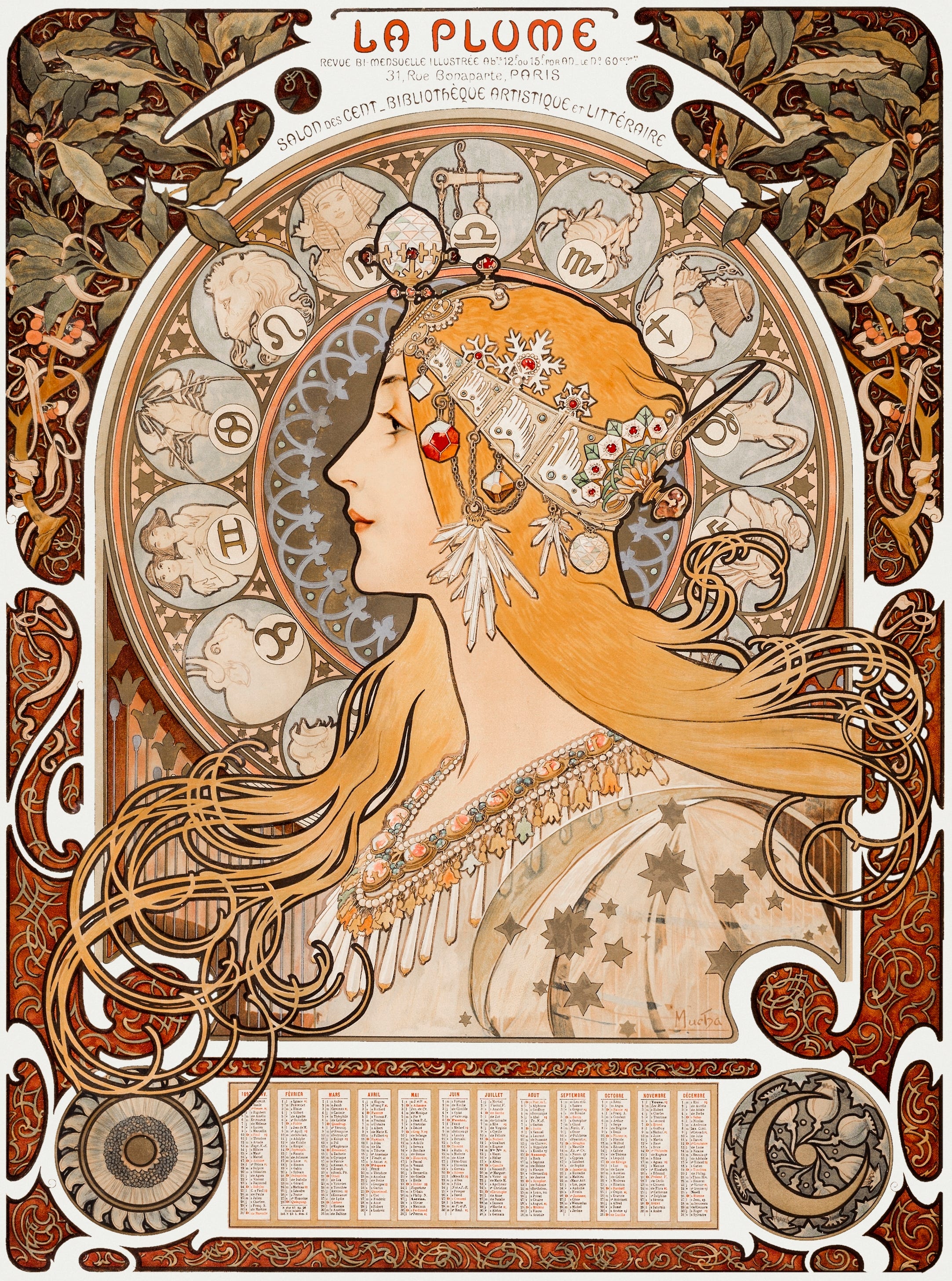
Advertising has always borrowed from art. At its best, however, the relationship is more substantial than appropriation. Advertising gives artists a public surface, a practical commission and an audience beyond the gallery. Artists give brands a visual language that can outlast the campaign itself.
The history of art in advertising is therefore not a minor branch of commercial design. It is part of the history of how images circulate, how public taste forms and how artists make a living. From Alphonse Mucha’s posters for Sarah Bernhardt to the illustrated campaigns of the early twentieth century, artists and advertisers built a shared visual culture in streets, newspapers, magazines and shop windows.
Today, when advertising is often optimized for speed, scale and measurable response, that history offers a useful proposition: a commercial image can still be culturally meaningful. Brands can commission artists not simply to decorate a message, but to shape how that message looks, feels and lives in public.
Alphonse Mucha and the modern advertising poster
In December 1894, Alphonse Mucha received the commission that changed his career. The Parisian printer Lemercier needed a poster for a new production of Victorien Sardou’s play Gismonda, starring Sarah Bernhardt. Mucha produced a tall, narrow image of Bernhardt in elaborate Byzantine dress, framed by decorative pattern and crowned with an ornate halo-like arch.
When the poster appeared across Paris in January 1895, it stood apart from the louder graphics surrounding it. Its pale palette, elongated format and controlled line created a sense of ceremony. Bernhardt recognized the force of the image and entered into a multi-year agreement with Mucha, who went on to design posters, costumes, jewellery and stage materials for her productions.
Mucha’s work is now closely associated with Art Nouveau, though he preferred to describe his practice as art rather than a personal style. His advertising posters for products such as JOB cigarette papers, Moët & Chandon and Lefèvre-Utile biscuits used the same attention to composition, ornament and figure as his theatrical work.
These were commercial images, but they were not visually disposable. They entered homes and collections, influenced decorative arts and helped define the atmosphere of fin-de-siècle Paris. Mucha demonstrated that an advertisement could sell a performance or product while also creating a complete imaginative world.
The golden age of advertising illustration
The late nineteenth century created the conditions for a new kind of public image. Advances in colour lithography made it possible to reproduce vivid illustrations at scale. Expanding cities supplied walls, kiosks and transit systems on which to display them. Mass-produced goods needed identities that could distinguish them from their competitors.
In France, Jules Chéret transformed the street poster through bright colour, energetic figures and bold lettering. Henri de Toulouse-Lautrec brought the nightlife of Montmartre into images for the Moulin Rouge and performers such as Aristide Bruant. Théophile Steinlen’s poster for Le Chat Noir turned a cabaret advertisement into one of the era’s most recognizable graphics.
This period is often described as the golden age of advertising illustration because artists were central to the way products and public events were presented. The commissioned illustrator was not treated only as a supplier of content. Their hand was the campaign’s point of difference.
A recognizable style gave an advertisement authority and emotional texture. It also gave the public something worth looking at. Before audiences could skip, block or scroll past an ad, the poster had to compete within a crowded urban environment. Its success depended on immediate clarity, but also on visual pleasure and memorability.
The result was a productive overlap between commercial art history and the history of fine art. Posters were printed in large editions for public use, then collected, exhibited and preserved. The distinction between advertising image and cultural object remained porous.
Artists built the language of brands
The partnership between artists and commerce continued as advertising moved into magazines, packaging and mass media. In the United States, illustrators including J.C. Leyendecker and Norman Rockwell created narrative images that helped define the visual character of popular publications and consumer life. Their pictures supplied more than product information. They offered scenes, personalities and social ideals.
In Britain, the railway companies commissioned artists to promote destinations through sophisticated travel posters. Designers including Tom Purvis, Edward McKnight Kauffer and Abram Games used geometry, abstraction and compressed visual storytelling to make transport feel modern. Shell’s long-running poster campaigns similarly invited artists to interpret the British landscape and the experience of travel.
These commissions worked because the institutions involved understood that cultural value could strengthen commercial communication. Rather than requiring every artist to imitate a fixed corporate style, they built coherence through selection, format and context. Difference was part of the system.
That principle later appeared in landmark collaborations between artists and brands. Salvador Dalí designed the enduring Chupa Chups logo in 1969. Andy Warhol moved between commercial illustration, popular products and fine art, making the boundaries among them a subject of his work. Absolut Vodka’s artist-led campaigns, beginning with Warhol in the 1980s, turned a consistent bottle silhouette into a platform for varied artistic interpretation.
Not every historical example should be copied, and many deserve critical scrutiny. Advertising has helped produce restrictive ideas about class, gender, race and consumption. Any contemporary return to artist commissions must be informed by that record. The aim is not nostalgia for an imagined golden age, but a better understanding of what made the strongest partnerships culturally consequential.
What was lost when advertising became content
Contemporary advertising operates under different conditions. Campaigns must adapt to many formats, respond to data and produce a continuous flow of assets. Templates and automated systems make that volume manageable, but they can also flatten distinction.
When every image is designed to satisfy the same platform conventions, brands begin to speak in interchangeable visual languages. The work may be clear and technically effective, yet leave little behind in public memory.
Artist collaborations in advertising offer an alternative, provided they are structured with care. An artist brings more than an aesthetic treatment. They bring a body of research, a relationship to materials, a point of view and often a connection to particular communities or histories.
This can create productive tension. Advertising usually seeks control and consistency. Artistic practice often depends on enquiry, interpretation and the possibility of surprise. The strongest collaborations do not eliminate that tension. They use it to produce work that neither party would have made alone.
How brands can commission artists well
A successful brand and artist collaboration begins before the artwork. It requires a clear reason for working together, a fair commissioning process and shared expectations about where the work will appear.
The first task is alignment. A brand should understand why a particular artist is relevant beyond surface style. Their methods, subjects, values and audience matter. Selecting an artist because their work already resembles a mood board is less compelling than identifying a genuine connection between their practice and the commission.
The brief should establish the practical framework without prescribing the answer. It needs to define objectives, formats, audiences, timelines and approvals while leaving room for the artist to think. If every creative decision has already been made, the artist is being hired for imitation rather than authorship.
Fair pay and transparent rights are essential. Agreements should distinguish between the creation fee, production costs and licensing. They should specify duration, territories, media, exclusivity, adaptations and archival use. Artists should receive visible credit wherever the format reasonably allows it.
Production also needs specialist coordination. Artwork may have to move from a studio process into print, film, packaging, public space or digital media. That translation should preserve the integrity of the original work rather than treating it as a file to be endlessly resized.
Finally, the relationship should be communicated honestly. Audiences can tell when an artist’s reputation is being used as a cultural shortcut. Brands should make space for the artist’s voice, explain the thinking behind the commission and avoid claiming ownership over a wider community or movement.
A new model for art in advertising
The future of art in advertising will not look exactly like Mucha’s Paris. The public wall is now joined by screens, social platforms, retail environments, packaging, moving image and immersive installations. Yet the central opportunity remains familiar: commission a distinctive artist to create an image people choose to spend time with.
This approach can work at several scales. A single illustration can provide the visual centre of a campaign. A group of artists can interpret a common theme across regions. A long-term commissioning programme can become part of a brand’s cultural identity. Public art and advertising can also meet through murals, temporary installations and artist-designed civic experiences, provided commercial presence is proportionate and transparent.
For cultural organizations, these partnerships can open routes to new audiences and revenue. For brands, they can build visual equity that is difficult to reproduce through generic content. For artists, they can provide resources, visibility and technically ambitious opportunities outside conventional art markets.
The measure of success should extend beyond immediate impressions. Did the commission add something meaningful to the artist’s practice? Was the work properly credited and compensated? Did it create a memorable public encounter? Could the image remain interesting after the campaign’s call to action has expired?
These questions move advertising closer to cultural strategy. They ask not only how attention is captured, but what deserves that attention and what remains after it has been given.
Bringing artistic authorship back to brands
The magic of Mucha’s posters did not come from ornament alone. It came from the union of an artist’s language, a public medium and a clear commercial purpose. His advertisements worked because they did not conceal their function, yet still offered imagination, craft and authorship.
That is the standard worth recovering. We want to help brands work with artists as genuine creative partners, building commissions in which strategy supports originality rather than smoothing it away. This means finding the right artist, creating a fair framework, protecting the integrity of the work and producing it with enough care to meet the public at its best.
Advertising does not have to imitate art to become more valuable. It can give artists space, resources and reach, then allow their ideas to change the communication itself. The result may be a poster, a film, a package, an installation or a visual system. Whatever its form, the ambition is the same: to make future ads that people remember as images, experiences and cultural objects, not simply as interruptions.